Enterprise · Mobile · Toshiba ELERA
Associate Mobile Redesign
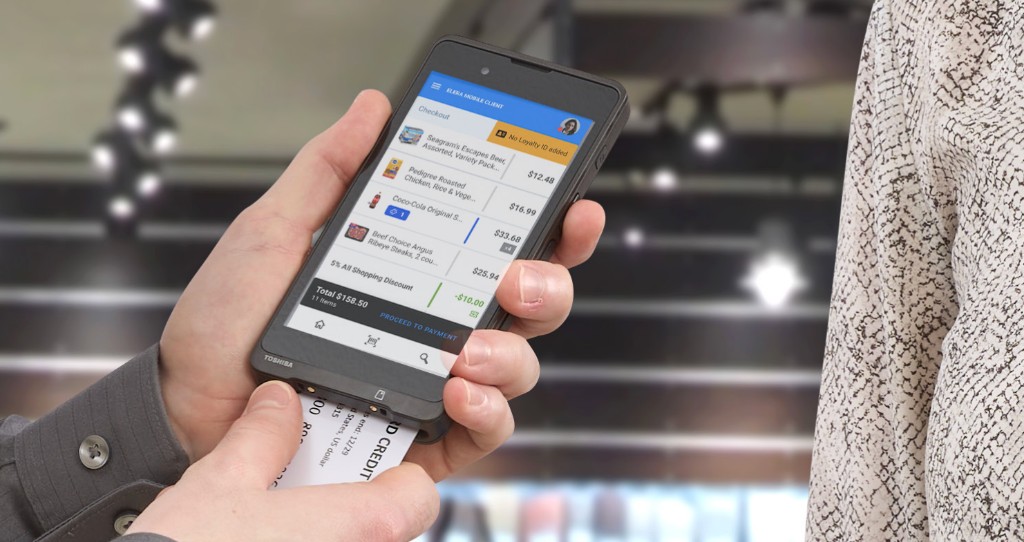
Toshiba ELERA® platform powers unified in-store experiences worldwide. I redesigned the Associate Mobile app, a critical tool store associates rely on during peak-hour checkout.

Improved operational efficiency and boosted checkout speed
Goals
Peak-hour speed
Speed up checkout and reduce walk-aways without adding new hardware
Associate clarity
Make critical actions visible and workflows harder to mess up during rush periods
Minimal disruption
Improve within existing store workflows with no new hardware or major operational changes
Impact
Faster checkout
+43% checkout speed for associates during peak hours
Less abandonment
−58% cart abandonment at mobile POS lanes
Revenue growth
+18% monthly revenue from improved store throughput
Overview
A critical tool during peak-hour checkout
Anywhere checkout
Line-busting, assisted selling, and returns on the floor
Peak-hour pressure
Associates move fast; the app has to keep up
Business stake
Slowdowns mean abandoned carts and lost revenue
Problem
Peak hours cost retailers revenue and loyalty
Retailers using Toshiba lose revenue during peak hours when carts are abandoned or customers switch to competitors, costing stores millions in lost sales each year.
15–20%
Revenue at risk
Peak-hour loss from cart abandonment & switching$50–$100M
Retailer scale
Mid-sized annual revenue band$7.5–$20M
Lost sales annually
Estimated yearly lost sales at mid-sized scaleUser research
Interviews, surveys, and usability testing
I needed to understand how associates work during peak hours and why shoppers still walk away, even with mobile and fixed POS on the floor. I conducted an in-store survey with customers and shopper assistants to quantify both sides of the experience.
7
User interviews and usability tests using think-aloud method
In-store
Survey with customers and shopper assistants
43.3%
Of shoppers still abandon lines despite mobile POS

Customers express frustration with wait times

Associates struggle with outdated tools
Associate inefficiencies from outdated systems directly impact the customer experience. Their pain points align with customer frustration about wait times and line abandonment.
What Associates Told Us
"I miss important notifications like 'printer out of paper.' They're hard to notice."- Shoppers Assistant
"Hidden options slow me down and customers get frustrated waiting."- Customer Service Lead
"In a rush, the app confuses me and I void items by mistake."- Cashier Supervisor
Insights
What did we learn from usability testing?
01
Visibility Issues
Critical notifications hidden02
Navigation Issues
Competing menus break flow03
Icon Mismatches
Icons don't match meaning04
Error Prevention
Risky placement of void button


Navigation list menu. Consolidated competing button menus into one scannable list so associates find actions without breaking flow.
Define
How might we
How might we speed up checkout and prevent walk-aways during peak hours using the resources the store already has, without major changes?
Constraints
Designing within real-world limits
No new hardware
Stores cannot afford another fixed-lane POS.Legacy system
Improve Associate Mobile within ELERA, no full platform rebuild.Time pressure
8 weeks from discovery to implementation.Solution
Redesigning for speed and fewer mistakes
I mapped each usability finding to a specific UI change, then prototyped against peak-hour checkout tasks and validated with think-aloud tests. The goal: reduce cognitive load by making actions scannable, predictable, and harder to trigger by mistake.


Peak-hour flow. End-to-end checkout redesigned so associates move faster during rush periods.
Appendix
When mobile POS works best
Mobile POS was expected to reduce queue abandonment, but 43.3% of shoppers still abandon lines. This comparison shows where Associate Mobile fits relative to fixed lanes and self-checkout.
| Use Case | Associate Mobile | Fixed POS | Self-Checkout |
|---|---|---|---|
| Peak-hour line-busting | ⭐⭐⭐ | ⭐ | ⭐⭐ |
| Assisted selling | ⭐⭐⭐ | ⭐ | – |
| Big baskets / complex tenders | ⭐ | ⭐⭐⭐ | ⭐ |
| Returns with verification | ⭐⭐⭐ | ⭐⭐ | – |
| Small Baskets | ⭐⭐⭐ | ⭐ | ⭐⭐⭐ |
Key takeaways
What this project proved
- Associates and customers named the same peak-hour bottleneck.
- Small UX fixes → +43% speed, −58% abandonment, +18% revenue.
- Legacy constraints still allow fast, high-impact shipping.
Collaborating closely with my team shaped how I approach complex systems: listen first, prototype against real store constraints, and measure what matters to the business.
Let's Create Something
Together
Get In Touch!